Tyre Blowout: What Causes Them and How to Stay Safe

Updated 2 October 2025
A tyre blowout is one of the most dangerous situations a driver can face on the road. Although relatively rare compared with other breakdown issues, blowouts can cause drivers to lose control of their vehicle in just a few seconds, particularly at higher motorway speeds. Sudden tyre failure is not only frightening—it can be life-threatening for you and other road users.
The good news is that tyre blowouts are often preventable with the right maintenance and driving habits. And if one does happen, knowing the correct steps to take can make all the difference in keeping you safe. This article will explain what a tyre blowout is, the most common causes, how to respond if it happens, and practical tips to prevent one from occurring in the first place.
What is a Tyre Blowout?
A tyre blowout is a sudden and rapid loss of air pressure in a tyre, usually caused by external damage, underinflation, or weakened rubber. Unlike a gradual puncture, which may give you some time to notice the tyre deflating, a blowout is immediate. The tyre often separates from its sidewall or bursts, leaving it completely destroyed.
This failure doesn’t just leave you with a flat—because it happens at speed, it drastically affects the vehicle’s stability. A blowout will often cause the car to pull strongly to one side, making the steering wheel difficult to control. The force of the blowout can also damage the wheel rim itself or other parts of the car’s bodywork.
Common Causes of Tyre Blowouts
Blowouts rarely happen entirely by chance. In most cases, they are the result of underlying tyre weakness combined with stress during driving. Understanding the causes helps you take steps to minimise your risk.
Under-inflated tyres
Driving on under-inflated tyres is one of the leading causes of blowouts. When pressure is too low:
- The tyre bulges under the weight of the car, increasing the area of rubber in contact with the road.
- This creates friction and heat, weakening the tyre’s structure.
- At higher speeds, the excess friction can make the tyre overheat to the point where it bursts.
Over-inflated tyres
Too much air pressure is equally dangerous. Over-inflated tyres become rigid, meaning the flexible rubber outer layer is stretched too far. This makes them:
- More prone to cuts and damage from debris.
- Less able to absorb impact from potholes or kerbs.
Misaligned wheels
Poor wheel alignment and suspension issues place uneven pressure on the tyres. If one section is forced into excessive contact with the road surface, it will wear faster than the rest. Over time, this produces weak spots that are vulnerable to blowouts.
Road hazards: potholes, kerbs, and debris
Striking a pothole, hitting a kerb, or driving over sharp debris can instantly damage the tyre wall. In some cases, the blowout is immediate. In others, the structural weakness may cause the failure later, perhaps at motorway speeds.
Vehicle overloading
Overloading puts excessive stress on tyres, particularly if they are already worn or underinflated. The additional weight:
- Increases heat build-up in the rubber.
- Raises the risk of separation between tyre layers.
- Amplifies wear and tear.
Excessive wear or ageing tyres
Tyres are not indestructible. Over time, rubber naturally deteriorates, even if the tread depth still looks adequate. Signs that your tyres may be at risk include:
- Sidewall cracks.
- Blisters or bulges in the rubber.
- Uneven tread wear.
- Tyres older than 5–6 years, even if unused frequently.
Age-related deterioration is often invisible, it makes the tyre more brittle and prone to sudden failure.
How to Stay Safe During a Tyre Blowout
If a blowout happens, your immediate priority must be to stay calm and maintain as much control as possible. While your instinct may be to slam on the brakes, this is the worst response, it can cause the car to spin out. Instead, follow these steps:
1. Maintain a firm grip on the steering wheel
The car will naturally pull in the direction of the failed tyre. Keep both hands firmly on the wheel and try to guide the car in a straight line.
2. Avoid harsh braking
Do not stamp on the footbrake, as this can cause the vehicle to lose traction and skid. If you must brake, do so very gently once you have slowed down.
3. Ease off the accelerator
Gradually lift your foot off the accelerator. Allow the car to decelerate naturally. The smoother your actions, the more stable the car will remain.
4. Change down gears (manual cars only)
In a manual vehicle, carefully change down gears to help reduce speed. Avoid sudden or rushed gear changes, which could make the car jolt.
5. Pull over safely
Once the car has slowed significantly and you feel in control, steer gently to the left-hand side of the road. Choose a safe spot to stop, such as the hard shoulder, and switch on your hazard lights.
6. Make yourself visible
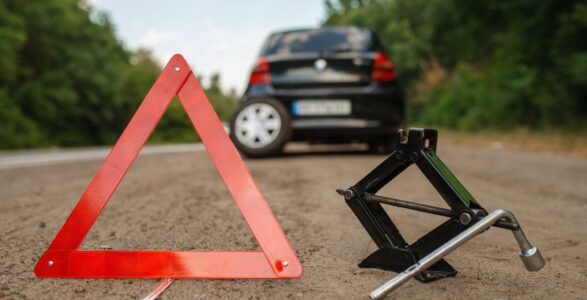
If you break down at the roadside, put on a high-visibility jacket if available. Place warning triangles behind your vehicle if it’s safe to do so, giving other road users time to react. Leave the car via the passenger side if you are close to traffic.
7. Call for assistance
Do not attempt to change a wheel on the hard shoulder of a motorway—it’s far too dangerous. Use your breakdown cover service, or call for roadside assistance to have the tyre replaced safely.
Preventing Tyre Blowouts
While it is important to know how to react during a blowout, the better strategy is to prevent one from happening in the first place. Blowouts are mostly avoidable through good tyre maintenance and careful driving habits.
Check tyre pressure regularly
- Always check tyre pressure when tyres are cold (before driving).
- Carry out weekly checks, as well as before long journeys.
- Adjust pressures to the manufacturer’s recommended levels, listed inside the fuel flap, driver’s door, or vehicle manual.
- Remember that tyre pressures can drop in cold weather, so more frequent checks may be needed in winter.
Monitor tread depth
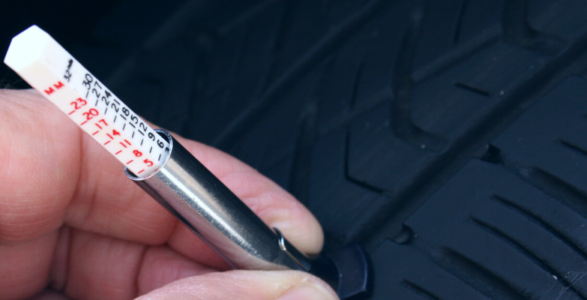
- The UK legal limit is 1.6mm, but safety experts recommend replacing tyres when tread depth falls below 3mm.
- Use a tread gauge or the built-in wear indicator found on many tyres.
Perform visual inspections
- Inspect the sidewalls for cracks, bulges, or signs of perishing.
- Look for sharp objects, nails, or stones lodged in the tyre.
- Check for uneven wear, indicating alignment or suspension issues.
Respect tyre age limits
- Even if tyres look fine, consider replacing them every 5–6 years.
- Tyres deteriorate over time, especially if exposed to direct sunlight, moisture, or rough storage.
Drive cautiously to avoid damage
- Slow down for potholes and rough roads whenever possible.
- Avoid mounting kerbs or rubbing tyres against them when parking.
- Do not overload your vehicle—check your car’s maximum load rating in the manual.
Routine professional checks
- Have your tyres balanced and alignment checked during annual services or when fitting new tyres.
- Regular rotations may extend tyre life if your mileage is high.
Tyre Blowouts vs. Punctures – Key Differences
| Puncture | Blowout | |
|---|---|---|
| Air loss: | Gradual | Instant, violent |
| Typical reaction: | Slow handling deterioration | Sudden steering pull, loud bang |
| Driving impact: | Can often continue to safe location | Immediate risk of losing control |
| Common cause: | Nail, sharp object, slow leak | Underinflation, wear, overload, impact |
Frequently Asked Questions
Can a blowout happen at low speed?
Yes, although they are more dangerous at high speeds. At low speed, a blowout usually results in a loud bang and difficulty steering rather than a crash.
Is a blowout the same as a flat tyre?
No. A flat tyre usually deflates slowly, while a blowout is an explosive loss of pressure that instantly destroys the tyre.
How can I tell if my tyre is close to failing?
Look for sidewall cracks, bulges, excessive wear, or exposed cords. If your tyres are over 5 years old, replace them even if they look safe.
Final Thoughts
A tyre blowout is every driver’s nightmare, sudden, loud, and potentially catastrophic. But with the right knowledge, you can reduce the risk dramatically. Regularly checking your tyres for pressure, tread wear, and damage, combined with careful driving, will help prevent the conditions that lead to sudden failure. And if the worst does happen, staying calm and following the correct steps to slow down and stop safely could save your life.
Taking just a few minutes each week to check your tyres is one of the simplest yet most effective ways to keep yourself, your passengers, and everyone else on the road safe from the dangers of a tyre blowout.
Back to all help and advice articles