MOTs: Everything You Need To Know

Updated 2 October 2025
An MOT test is a legal requirement for most vehicles in the UK once they reach three years of age. It helps ensure your car is safe, roadworthy, and compliant with environmental standards. Here’s everything you need to know about MOT tests, from costs and exemptions to what’s checked and what happens if you fail.
What is an MOT?
An MOT (Ministry of Transport test) is an annual check for vehicles over three years old in the UK. The test focuses on road safety, emissions, and key components — confirming the vehicle is safe to drive and meets environmental standards.
How Much Does an MOT Cost?
MOT fees are set by the government, and while garages may charge less than the maximum fee, they cannot charge more.
-
Cars with up to 8 passenger seats: £54.85 (max fee)
-
Motorcycles: £29.65 (max fee)
-
Larger vehicles such as vans and minibuses have higher fees
The full breakdown of MOT costs can be found on the GOV.UK website.
When Do I Need an MOT Test?
-
Your car needs its first MOT when it turns three, based on its registration date.
-
After that, it must be tested every 12 months.
-
Once your vehicle passes, you’ll get a certificate showing the test and expiry dates.
-
You can book an MOT up to one month (minus a day) before expiry and still keep the same renewal date.
MOT Exemptions
Some vehicles do not need an MOT:
-
Cars and motorcycles over 40 years old (as long as they haven’t had major modifications).
-
Certain types of tractors and other specialist vehicles.
How Can I Check My MOT Due Date?
If you’ve misplaced your certificate or just want to check, you can use the Government’s online MOT checker. By entering your registration number, you’ll instantly see your MOT status and can even order a free copy of your certificate.
MOT Advisory Notes Explained
Your vehicle may pass its MOT but still come with advisory notes. These highlight minor faults that aren’t bad enough for a fail but should be fixed soon.
Examples include:
-
Tyres close to the legal tread limit
-
Brake pads showing early wear
-
Small windscreen chips outside the driver’s line of sight
Advisories are warnings. Ignoring them may lead to a future failure, higher repair costs, or lower resale value.
What Happens If My Car Fails an MOT?
-
If your vehicle fails but your current MOT is still valid and no “dangerous” defects are listed, you can drive it (until the expiry date).
-
If “dangerous” faults are recorded, you cannot drive the vehicle until repairs are made.
-
You can choose to repair it at the same garage or have it fixed elsewhere, but it must always meet the minimum roadworthy standard.
What Is Checked During an MOT?
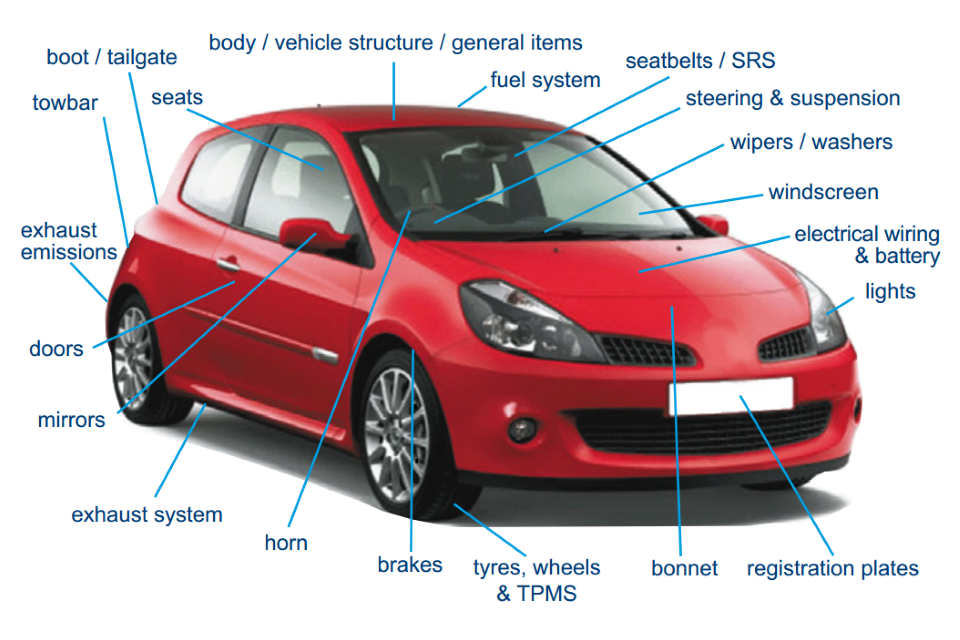
The MOT test covers safety-critical and environmental components. It is not the same as a full service. Key checks include:
-
Bodywork and structure
-
Towbars and load security
-
Fuel system and emissions
-
Exhaust system
-
Seatbelts and seats
-
Doors, mirrors, and registration plates
-
Brakes, tyres, and wheels
-
Lights, indicators, horn
-
Windscreen, wipers, and washers
-
Steering and suspension
-
Electrical wiring
-
Vehicle Identification Number (VIN)
For full guidance, see the MOT inspection manual.
Pre-MOT Checks You Can Do Yourself
Carrying out simple checks before your MOT can save time and money:
-
Seatbelts & Seats: Check they’re secure and undamaged.
-
Doors & Bonnet: Ensure they open, close, and latch properly.
-
Mirrors & Lights: Make sure they are clean, secure, and working.
-
Tyres & Wheels: Use the 20p coin test to check tread depth (1.6mm minimum across the central tread).
-
Wipers & Washers: Refill screenwash and check for tears.
-
Windscreen: Look for cracks or chips — especially in the driver’s view.
-
Horn: Make sure it works.
-
Number Plates: Must be readable, legal, and securely attached.
These small checks can prevent failures for “easy fix” issues. If you’re unsure how to change a bulb or wiper blade, free guides and video tutorials are widely available.
Penalties for No MOT
Driving without a valid MOT can result in:
-
A fine of up to £1,000
-
If a vehicle is deemed “dangerous”: up to £2,500 fine, 3 penalty points, and even a driving ban
Insurance may also be invalidated if you drive without a valid MOT.
MOT Reminders
You can sign up for free email or text reminders through the GOV.UK reminder service. You’ll need your vehicle’s registration number and an email address or mobile number.
Back to all help and advice articles


