Understanding the Difference Between Insolvency and Bankruptcy
Updated 25 September 2025
Many people confuse insolvency and bankruptcy, often using the terms interchangeably. While they are closely related, they have distinct meanings and implications. Knowing the difference can help you better understand your financial position and the options available.
Insolvency: A State of Financial Distress
Insolvency describes a financial situation where an individual or business cannot meet debt obligations as they fall due. Put simply, liabilities outweigh assets, and there is insufficient income or liquidity to keep up with payments.
Causes of Insolvency:
- Economic downturns
- Poor financial management
- Unexpected events or losses
Key Details:
- Definition: When a company or individual cannot repay debts on time.
- Types:
- Cash flow insolvency: when there is not enough liquidity to pay debts despite having valuable assets.
- Balance sheet insolvency: when total liabilities exceed total assets.
- Who it applies to: Individuals and businesses alike.
- Outcomes: Insolvency itself is not a legal process. It can lead to solutions such as debt management plans, company administration, or in some cases, bankruptcy.
Bankruptcy: A Legal Process Following Insolvency
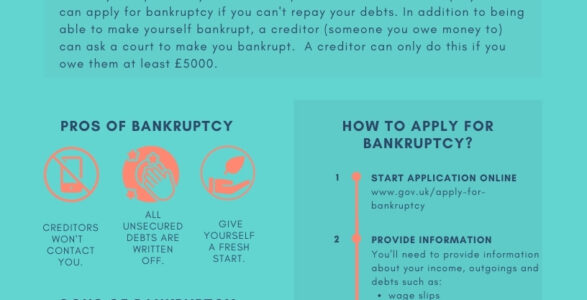
Bankruptcy is a formal legal procedure designed to resolve the debts of an insolvent individual or sole trader. It provides protection from creditors and ensures the fair distribution of available assets, while also giving debtors a chance to reset financially.
Key Details:
- Definition: A court-ordered process declaring an individual unable to repay debts, leading to debt discharge after a period.
- Who it applies to: Individuals and sole traders with unlimited personal liability. Companies cannot go bankrupt, but they can enter insolvency procedures such as liquidation or administration.
- How it works:
- Initiated either by the debtor or by creditors petitioning the court.
- Assets may be sold to repay creditors, though some essential possessions can be exempt.
- Remaining eligible debts are written off after the bankruptcy term (usually 12 months in the UK).
Key Differences Between Insolvency and Bankruptcy
- Nature: Insolvency is a financial state, whereas bankruptcy is a formal, legal process.
- Scope: Insolvency can affect businesses and individuals. Bankruptcy only applies to individuals and sole traders.
- Outcomes: Insolvency can be addressed in several ways (repayment plans, restructuring, administration, or liquidation), whereas bankruptcy specifically aims to discharge personal debt.
Final Thoughts
Bankruptcy can offer a fresh start for someone overwhelmed by debt, but it carries serious consequences, including restrictions on borrowing and potential impacts on long-term credit. It should always be considered a last resort. Seeking professional advice is essential before making any decisions about insolvency or bankruptcy.
Struggling with Financial Difficulties?
If financial stress is affecting your mobility, understanding your options is vital. At Compass Vehicle Services, we provide car leasing solutions for drivers with less than perfect credit.
Learn more about our bad credit car leasing options and explore a practical way to regain your independence.